Meal Prep for Beginners: A Complete Guide to Save Time & Money
New to meal prep? This 5-step beginner guide teaches you how to prep a week of meals in 90 minutes. Save 10+ hours and cut your food bill in half.
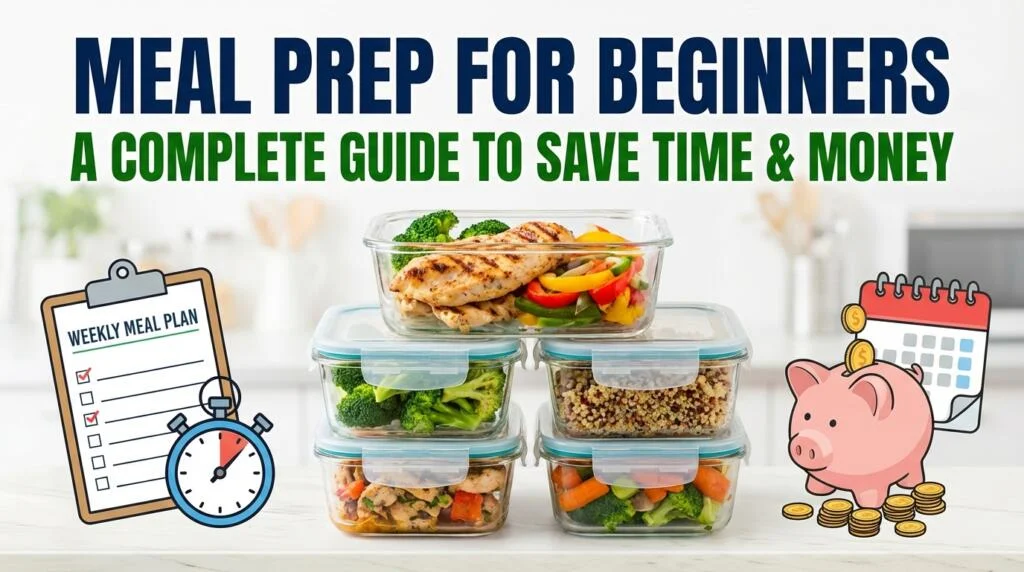
You’ve heard people rave about meal prep — how it saves them hours of time and hundreds
of dollars every month. But every time you try to start, you get overwhelmed. How much food do I
make? What containers do I need? Won’t it get boring eating the same thing every day?
This guide answers every question. By the end, you’ll have a simple, repeatable system that
takes just 1–2 hours on Sunday and sets you up with healthy, delicious meals for the entire
week.
📋 Table of Contents
🍱 What Is Meal Prep (And What It’s NOT)
Meal prep is simply cooking food in advance so you have ready-to-eat meals throughout the week.
That’s it. It’s not about eating bodybuilder-style chicken and broccoli every day. It’s not about spending your
entire Sunday in the kitchen. And it’s definitely not about giving up flavor.
There are three main approaches to meal prep:
- Full Meal Prep: Complete meals portioned into containers, ready to reheat and eat. Best for
lunches and work meals. - Ingredient Prep: Washing, chopping, and cooking individual ingredients (rice, veggies,
protein) that you assemble into different meals during the week. Best for people who like variety. - Batch Cooking: Making a large quantity of one dish (like soup, chili, or curry) and eating
it throughout the week or freezing portions. Best for beginners.
and chop your vegetables. Mix and match throughout the week so you never eat the exact same meal twice.
📊 Why Meal Prep Works — The Numbers
| Benefit | Without Meal Prep | With Meal Prep |
|---|---|---|
| Time spent on food decisions/week | 5–7 hours | 1–2 hours |
| Average weekly food spending | $120–$200 | $50–$80 |
| Times ordering delivery/week | 3–5 times | 0–1 times |
| Food waste per month | $50+ in thrown-away ingredients | Near zero |
| Daily decision fatigue | “What should I eat?” x3/day | Zero — it’s already done |
🔧 5-Step Beginner Meal Prep System
Step 1: Pick Your Prep Day (30 seconds)
Sunday is the most popular choice because it sets you up for the week ahead. Some people also do
a mini prep on Wednesday to keep things fresh. Block out 1.5–2 hours on your
calendar — treat it like an appointment you can’t skip.
Step 2: Choose 3 Proteins + 2 Carbs + 3 Veggies (5 minutes)
Don’t overcomplicate this. Pick from these lists:
Proteins (choose 2–3):
- Chicken breast or thighs (baked or grilled)
- Ground turkey or beef (for bowls, tacos, stir-fry)
- Hard-boiled eggs (for snacks and salads)
- Canned tuna or salmon (zero cooking needed)
- Tofu or chickpeas (plant-based option)
Carbs (choose 1–2):
- Rice (jasmine, brown, or basmati)
- Pasta (cook and store separately with oil)
- Sweet potatoes (bake whole, use all week)
- Quinoa (high protein grain)
Vegetables (choose 2–3):
- Broccoli or cauliflower (roast or steam)
- Bell peppers + onions (dice for stir-fry or fajitas)
- Spinach or mixed greens (pre-washed bags = zero prep)
- Zucchini, carrots, or green beans
Step 3: Cook Everything in 90 Minutes
Here’s the trick — use all your appliances simultaneously:
- 0:00 — Start rice in the rice cooker or pot. Set and forget.
- 0:05 — Season chicken and put in the oven at 400°F.
- 0:10 — While chicken bakes, chop all vegetables.
- 0:20 — Put broccoli/veggies on a sheet pan, into the oven alongside chicken.
- 0:25 — Start boiling eggs. Set timer for 10 minutes.
- 0:35 — Brown ground meat on the stovetop if applicable.
- 0:45 — Everything starts finishing. Start portioning into containers.
- 1:00–1:30 — All food is cooked, portioned, and cooling.
Step 4: Portion into Containers
You need 10–12 containers for a full week of lunches and dinners. Glass containers are best
because they don’t stain, don’t absorb odors, and are microwave-safe. Each container gets:
- 1 portion protein (4–6 oz)
- 1 portion carb (1/2 – 1 cup)
- 1 portion vegetables (1 cup)
Step 5: Store Properly
- Fridge: Meals you’ll eat in the next 3–4 days
- Freezer: Meals for days 5–7 (thaw overnight before eating)
- Label everything with the date using masking tape and a marker
⚠️ 5 Meal Prep Mistakes to Avoid
- Prepping too many recipes at once. Start with 2–3 simple meals. You can always add variety
later once you’ve built the habit. - Making food you don’t actually enjoy. Meal prep only works if you look forward to eating
the food. Don’t force yourself to eat plain boiled chicken — season it, sauce it, make it taste good. - Ignoring sauce variety. The same grilled chicken tastes completely different with teriyaki
sauce vs. salsa vs. tzatziki. Stock up on 3–4 sauces and rotate them throughout the week. - Forgetting to cool food before storing. Putting hot food directly into containers creates
condensation, which makes food soggy. Let everything cool for 15–20 minutes first. - Not investing in good containers. Cheap plastic containers crack, stain, and leak. Spend
$25–$30 on a set of glass containers — they’ll last years and make the whole process more enjoyable.
📦 How Long Does Meal Prep Last?
| Food Type | Fridge Life | Freezer Life |
|---|---|---|
| Cooked chicken | 3–4 days | 2–3 months |
| Cooked rice | 4–5 days | 6 months |
| Roasted vegetables | 3–4 days | 2 months |
| Hard-boiled eggs | 7 days | Not recommended |
| Cooked pasta | 3–5 days | 2 months |
| Soups & stews | 3–4 days | 3–4 months |
❓ Frequently Asked Questions
How much does meal prepping cost per week?
The average weekly meal prep costs $50–$80 for one person, covering lunches and dinners for 5 days. Compare
that to eating out or ordering delivery which averages $150–$200+ per week. Most people save $300–$500 per
month once they start meal prepping consistently.
Won’t I get bored eating the same food every day?
Only if you prep the same complete meal 5 times! The secret is to prep ingredients separately (protein,
grains, veggies) and combine them differently each day. Monday’s chicken-rice-broccoli becomes Tuesday’s
chicken wrap and Wednesday’s chicken stir-fry — same ingredients, totally different meals.
What containers are best for meal prep?
Glass containers with snap-lock lids are the gold standard. They don’t stain, don’t absorb smells, are
microwave and dishwasher safe, and last for years. A set of 10 glass containers costs about $25–$30 and pays
for itself in the first week of saved delivery fees.
Can I meal prep if I have a small kitchen?
Absolutely! You don’t need a big kitchen — you need a system. Use your oven, stovetop, and a rice cooker
simultaneously. Even a college dorm with a microwave and mini-fridge can support basic meal prep using
overnight oats, grain bowls, and no-cook meals.
How do I reheat meal prep without it getting soggy or dry?
Add a tablespoon of water to rice and grain dishes before microwaving — this creates steam that restores
moisture. For proteins, reheat in a skillet instead of microwave when possible. Store sauces and dressings
separately and add them after reheating.
one protein, one grain, and chop some veggies. That’s it. You can always level up later — but the hardest part
is simply starting.



Reader reviews
No reviews yet. If you have made this article, you will be the first to say how it went.
Did you make this?
Tell us how it actually went — including if something did not work. Reviews are read before they are published.