How to Store Spices Properly: The Complete Freshness Guide
Your spices are probably expired! Learn how to store spices properly to keep them fresh 3x longer. Includes a spice shelf life chart, storage dos and donts, and organization tips.

Your Spices Are Probably Expired (And You Don’t Even Know It)
Let’s start with an uncomfortable truth: the average American kitchen contains spices that are 2-4 years past their prime. That jar of paprika you bought three years ago? It’s essentially colored dust. Those dried herbs from 2022? They’ve lost 75% of their flavor. And that ground cinnamon living near your stove? Heat has been destroying it for months.
Expired spices won’t make you sick — but they will ruin your cooking. When spices lose their potency, you need to use more to get the same flavor, recipes taste flat no matter what you do, and you end up questioning your cooking skills when the real problem is sitting in your spice rack.
This complete guide covers everything you need to know about spice storage, shelf life, organization, and how to tell when it’s time to replace them. Your cooking will improve immediately.
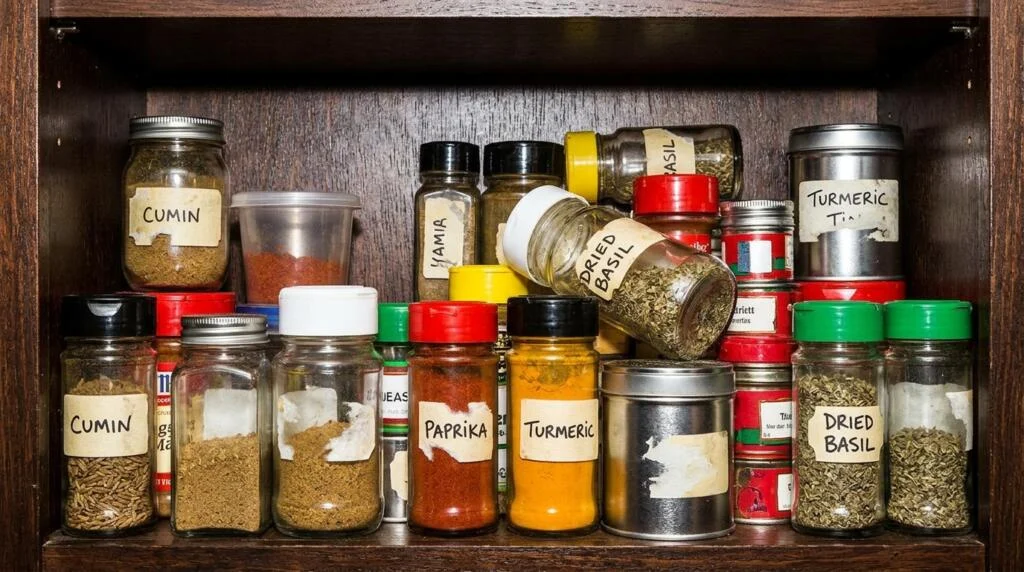
How Long Do Spices Actually Last?
Spices don’t “expire” in the same way food does — they don’t become unsafe to eat. But they do lose their essential oils, aroma, and flavor over time. Here’s a comprehensive shelf life chart:
| Spice Type | Examples | Peak Freshness | Still Usable | Replace After |
|---|---|---|---|---|
| Whole spices | Peppercorns, cinnamon sticks, cumin seeds, cloves | 3-4 years | 4-5 years | 5 years |
| Ground spices | Paprika, cumin, cinnamon, turmeric, chili powder | 6-12 months | 1-2 years | 2-3 years |
| Dried herbs | Oregano, basil, thyme, parsley, rosemary | 6-12 months | 1-2 years | 2-3 years |
| Spice blends | Curry powder, Italian seasoning, taco seasoning | 6 months | 1 year | 1-2 years |
| Seeds | Sesame, poppy, fennel, mustard | 2-3 years | 3-4 years | 4 years |
| Extracts | Vanilla, almond, peppermint | 3-4 years | 5+ years | Practically indefinite |
| Salt | Table, sea, Himalayan, kosher | Indefinite | Indefinite | Never (it’s a mineral) |
Key insight: Whole spices last 3-4x longer than ground spices because there’s less surface area exposed to air. This is why buying whole spices and grinding as needed is the single best thing you can do for flavor.
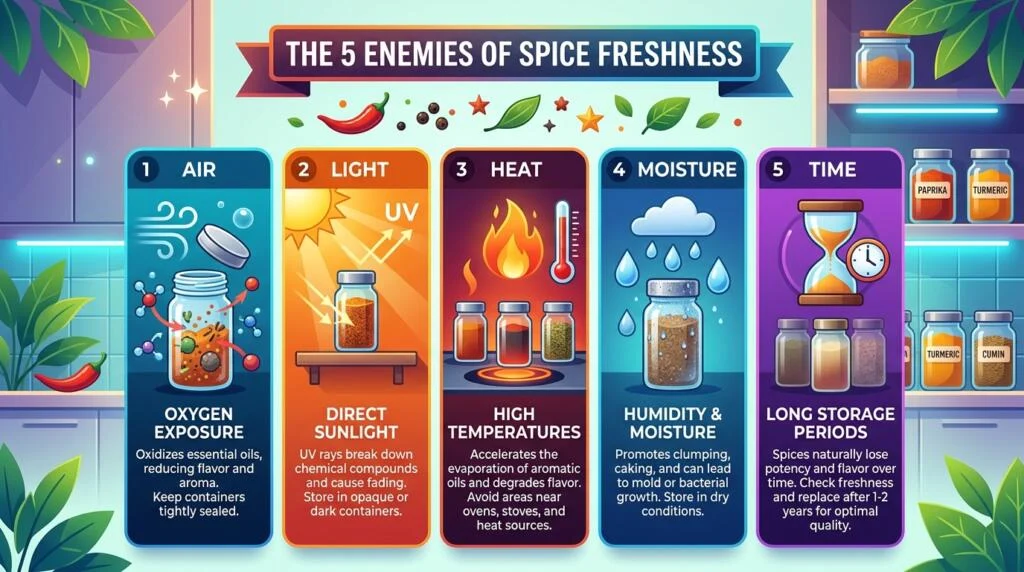
The 5 Enemies of Spice Freshness
1. Heat
Heat accelerates the evaporation of essential oils — the compounds that give spices their flavor and aroma. Never store spices above or next to the stove, oven, or dishwasher. The wall-mounted spice rack next to the range? It looks great but it’s the worst possible location. Even room temperature (68-72°F) is adequate; the key is avoiding heat sources.
2. Light
Ultraviolet light breaks down the chemical compounds in spices, causing them to fade in color and flavor. Store spices in opaque containers or in a dark cabinet. Those beautiful clear glass jars on an open shelf? They look Instagram-worthy but accelerate degradation. If you insist on clear jars, keep them inside a closed cabinet.
3. Moisture
Moisture causes clumping, mold growth, and flavor dilution. Never shake spices directly over a steaming pot — the steam enters the container and introduces moisture. Instead, measure spices into your hand or a small bowl first, then add to the pot.
4. Air
Oxygen oxidizes the essential oils in spices, causing them to go stale. Keep containers tightly sealed when not in use. Replace loose-fitting lids immediately. If you buy spices in plastic bags, transfer them to airtight jars or containers.
5. Time
Even with perfect storage, spices naturally degrade over time. The solution is simple: buy smaller quantities more frequently rather than large containers that sit for years. Date your spices when you open them with a piece of tape and a marker.
The Best Storage Containers for Spices
| Container Type | Pros | Cons | Rating |
|---|---|---|---|
| Glass jars with airtight lids | Best seal, no chemical leaching, easy to clean | Heavy, breakable, light exposure if clear | ⭐⭐⭐⭐⭐ |
| Tin/metal containers | Light-proof, lightweight, stackable | Can corrode over time with acidic spices | ⭐⭐⭐⭐ |
| Ceramic jars | Light-proof, attractive, no chemical leaching | Heavy, can’t see contents, expensive | ⭐⭐⭐⭐ |
| Original store packaging | Convenient, no transfer needed | Poor seal, flimsy, inconsistent sizes | ⭐⭐ |
| Plastic containers | Lightweight, cheap, unbreakable | Can absorb odors, chemical leaching risk | ⭐⭐ |
How to Test if Your Spices Are Still Good
Use this simple 3-step test for any spice:
- Visual check: Has the color faded significantly? Vibrant paprika that’s now pale brown has lost its potency.
- Aroma test: Rub a small amount between your fingers and smell. If the scent is weak, faint, or nonexistent, the spice is past its prime.
- Taste test: Place a tiny amount on your tongue. If the flavor is muted, musty, or just “off,” it’s time to replace it.
If a spice fails any of these tests, it’s not doing your cooking any favors. Replace it — most ground spices cost $2-5 and the flavor difference in your cooking will be dramatic.
The Best Way to Organize Your Spice Collection
Method 1: The Drawer System (Best for Most Kitchens)
Store spices in a dedicated drawer with jars laid on their sides, labels facing up. This lets you see every spice at a glance without digging through a cabinet. Use a drawer insert or simple tension rod to keep jars from rolling.
Method 2: Cabinet Door Racks
Mount thin racks on the inside of cabinet doors to hold spice jars. This keeps them dark (protected from light), accessible, and doesn’t use any counter or drawer space.
Method 3: Magnetic Jars on a Wall or Fridge
Fill small tins with magnetic backs and stick them to a metal strip or your refrigerator. This is visually striking and space-efficient, but makes sure the location isn’t near a heat source.
Organization Best Practices
- Arrange alphabetically — it sounds boring but it’s the fastest system when cooking
- Group by cuisine type (Italian herbs together, Indian spices together) if you cook specific cuisines often
- Keep your top 10 most-used spices in the most accessible position
- Label everything clearly — especially if using uniform containers
- Date every spice when you open it
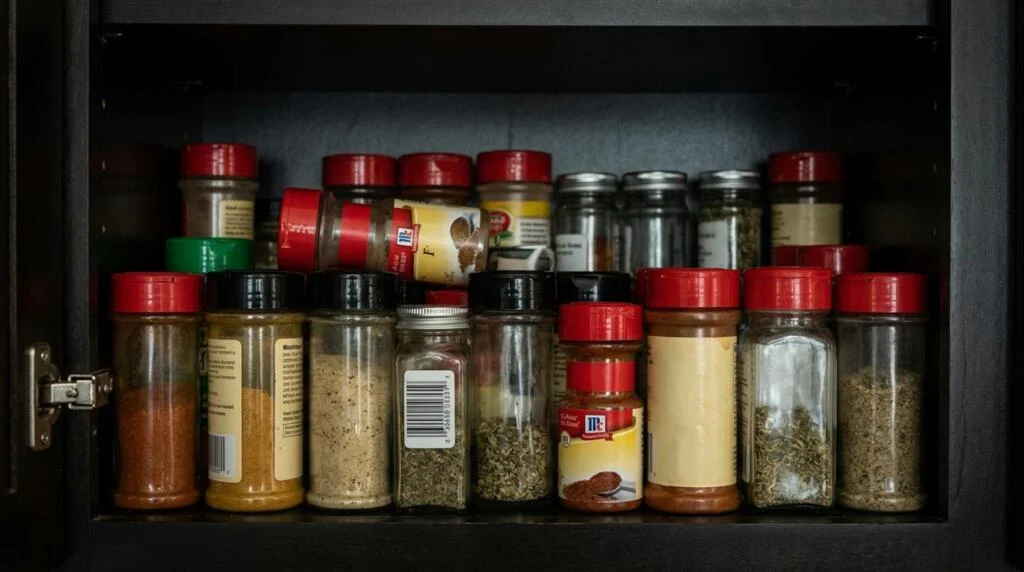
Why Buying Whole Spices Is Worth It
Whole spices retain their essential oils inside their cells until the moment they’re crushed or ground. Once ground, those oils begin evaporating immediately. This is why freshly ground pepper is explosively flavorful while pre-ground pepper is merely “peppery.”
Invest in a simple spice grinder or mortar and pestle. Toast whole spices in a dry pan for 30-60 seconds until fragrant, then grind. The flavor difference is nothing short of transformational.
Top Spices to Buy Whole
- Black peppercorns — grind fresh for every use (the single biggest upgrade you can make)
- Cumin seeds — toast and grind for Indian, Mexican, and Middle Eastern dishes
- Cinnamon sticks — better for slow-cooking and infusions
- Nutmeg — freshly grated is night-and-day different from pre-ground
- Cloves — incredibly potent whole; use sparingly
- Cardamom pods — crack and use seeds for incredibly aromatic dishes
Frequently Asked Questions
Can expired spices make you sick?
No. Expired spices are safe to consume — they just lose their flavor, aroma, and potency over time. The only exception is if moisture has entered the container and caused visible mold growth, in which case the spice should be discarded.
Should I refrigerate or freeze spices?
Most spices do not need refrigeration. However, you can freeze whole spices and seeds to extend their life significantly (up to 5+ years). Avoid freezing ground spices, as condensation when removing from the freezer can introduce moisture. If you do freeze, use them directly from frozen — do not thaw and refreeze.
How can I get the most flavor from my spices?
Three techniques make the biggest difference: (1) Buy whole and grind fresh, (2) Toast spices in a dry pan for 30-60 seconds before using — heat activates volatile oils, (3) Add ground spices early in cooking (to bloom in oil) and dried herbs near the end (to preserve their delicate flavors).
Is there a difference between cheap and expensive spices?
Yes, significantly. Cheap spices are often older, processed in bulk, and may contain fillers. Quality spices from specialty spice shops or ethnic grocery stores are typically fresher, more potent, and sometimes cheaper per ounce than supermarket brands. Ethnic grocery stores are often the best value for high-quality spices.
The Bottom Line
Proper spice storage is one of the most overlooked aspects of home cooking — and one of the easiest to fix. Audit your spice collection today: check dates, smell everything, and replace anything that’s lost its punch. Store in airtight containers, away from heat and light, and consider making the switch to whole spices for your most-used flavors. These simple changes will make your cooking taste noticeably better starting from your very next meal.



Reader reviews
No reviews yet. If you have made this article, you will be the first to say how it went.
Did you make this?
Tell us how it actually went — including if something did not work. Reviews are read before they are published.