One-Pot Lemon Herb Salmon — Healthy Dinner in 5 Minutes
Perfectly cooked salmon with a bright lemon herb butter sauce, all made in one pot in just 5 minutes. This restaurant-quality dish is packed with omega-3 fatty acids and protein while being incredibly low in carbs. The lemon herb butter creates a golden glaze that makes every bite burst with fresh vibrant flavor. If you think cooking fish is hard or intimidating, this recipe will completely change your mind.
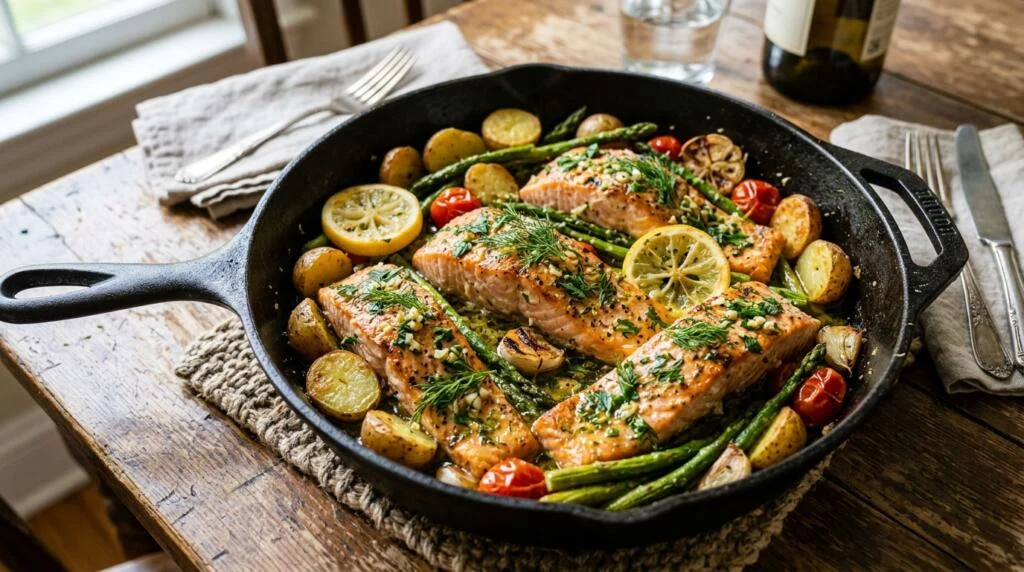
Method
- Pat salmon fillets dry with paper towels — this is crucial for getting a crispy sear. Season both sides generously with salt and pepper.
- Heat olive oil in a skillet over medium-high heat until shimmering.
- Place salmon skin-side up (or presentation-side down if skinless) in the hot pan. Cook for 3 minutes without moving — you want a beautiful golden crust.
- Flip the salmon. Add butter and garlic to the pan. Once the butter melts and foams, add lemon juice, dill, and parsley.
- Baste the salmon with the lemon herb butter using a spoon — tilt the pan slightly and spoon the butter over the fish repeatedly for 1 minute.
- Remove from heat. The salmon will continue cooking in the residual heat. Garnish with lemon zest, lemon slices, and extra herbs.
- Serve immediately — the salmon should be slightly pink in the center for the juiciest result.
Perfectly cooked salmon with a bright lemon herb butter sauce, all made in one pot in just 5 minutes. This restaurant-quality dish is packed with omega-3 fatty acids and protein while being incredibly low in carbs. The lemon herb butter creates a golden glaze that makes every bite burst with fresh vibrant flavor. If you think cooking fish is hard or intimidating, this recipe will completely change your mind.
Nutrition per serving
- Calories
- 350 kcal
- Protein
- 42 g
- Carbs
- 2 g
- Fat
- 18 g
- Sodium
- 380 mg
Values are estimates based on USDA FoodData Central and vary with brands and portioning.
Chef notes
Pat the salmon BONE DRY before seasoning. Any moisture on the surface will steam instead of sear, and you will never get that gorgeous golden crust. Also, do not flip too early — 3 full minutes on the first side without touching it. The fish will release naturally from the pan when it is ready to flip. If it sticks, it needs more time.
Substitutions
- Use cod, halibut, or sea bass instead of salmon — adjust cooking time based on thickness. — Replace butter with ghee for a lactose-free option.|Use lime and cilantro instead of lemon and dill for a cilantro-lime fish.|Replace fresh herbs with dried Italian seasoning if fresh herbs are not available.
Serving suggestions
Serve over a bed of steamed asparagus or roasted vegetables.|Pair with garlic mashed potatoes for comfort food vibes.|Serve with cauliflower rice for a low-carb complete meal.|Goes beautifully with a simple arugula salad dressed with lemon vinaigrette.
Storage
Store cooked salmon in the fridge for up to 2 days. Salmon is best eaten fresh, but leftovers make excellent salmon salad or can be flaked over pasta.
Reheating
Gently reheat in a skillet over low heat with a splash of butter for 2-3 minutes. Avoid the microwave if possible — it can dry out the fish and make it rubbery.
Equipment
- Oven-safe skillet or non-stick pan
- Fish spatula (thinner and more flexible than a regular spatula)
- Paper towels for drying fish
- Spoon for basting
Variations
- Cajun blackened salmon — coat with cajun spice blend instead of herbs.
- Honey garlic salmon — add 1 tablespoon honey and extra garlic to the sauce.
- Teriyaki salmon — use soy sauce, mirin, and ginger instead of lemon.
- Pesto salmon — top with basil pesto during the last 30 seconds of cooking.
Why it works
Salmon is one of the most forgiving fish to cook because of its high fat content — the omega-3 fatty acids essentially self-baste the fish as it cooks. The key technique here is basting with butter: when you spoon hot melted butter over the fish, you are cooking it from both sides simultaneously. This results in an evenly cooked fillet with a crispy bottom and a perfectly glazed top in half the time.
Frequently asked questions
How do I know when salmon is done?
Salmon is done when it reaches 145°F (63°C) internal temperature. For a slightly pink, moist center (our recommendation), pull it at 135°F (57°C) — it will coast to 145°F (63°C) while resting.
Should I remove the skin?
Skin helps hold the fillet together during cooking and gets deliciously crispy when seared. You can eat it or easily peel it off after cooking.
What if my salmon sticks to the pan?
Your pan was not hot enough or the fish was not dry enough. Use a non-stick pan if you are worried about sticking.
Is farmed or wild salmon better?
Wild-caught salmon has a cleaner flavor and higher omega-3 content, but farmed salmon works perfectly fine for this recipe and is more budget-friendly.
Can I use frozen salmon?
Yes, but thaw it completely in the fridge overnight first. Never cook frozen salmon in a skillet — it will steam instead of sear.
Tags
About the cook

Chef Sarah Mitchell
Professional chef with 12+ years of experience specializing in quick and healthy weeknight meals.
More like this
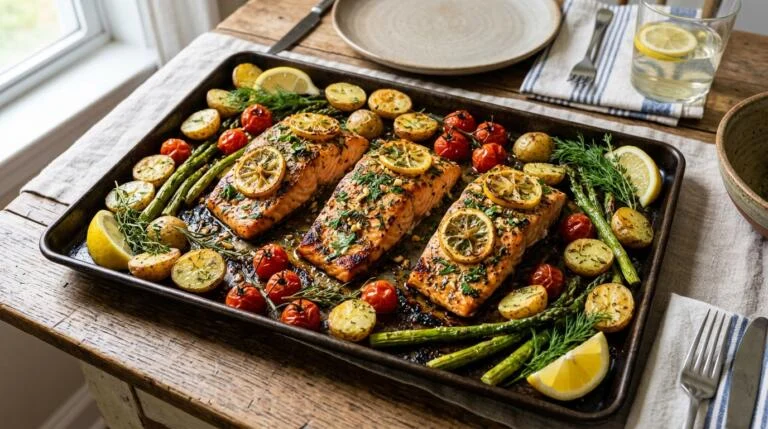 Dinner
20min
Easy One-Pan Lemon Herb Salmon Recipe
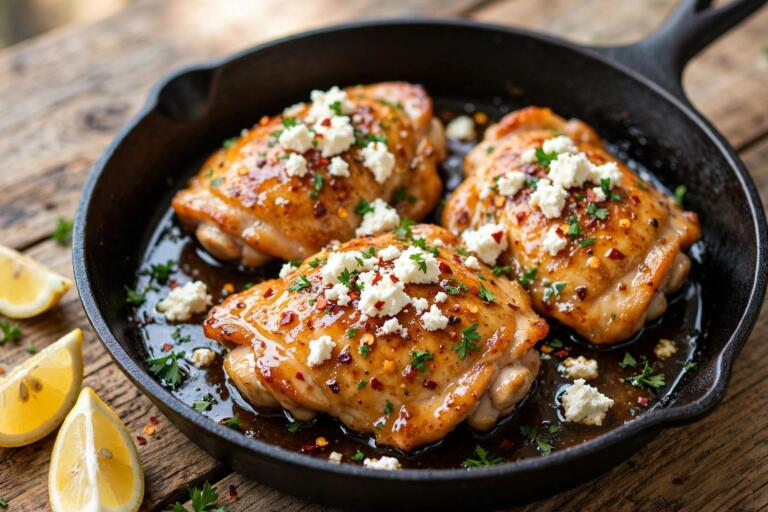 Dinner
30min
Hot Honey Feta Chicken (30 Minutes)
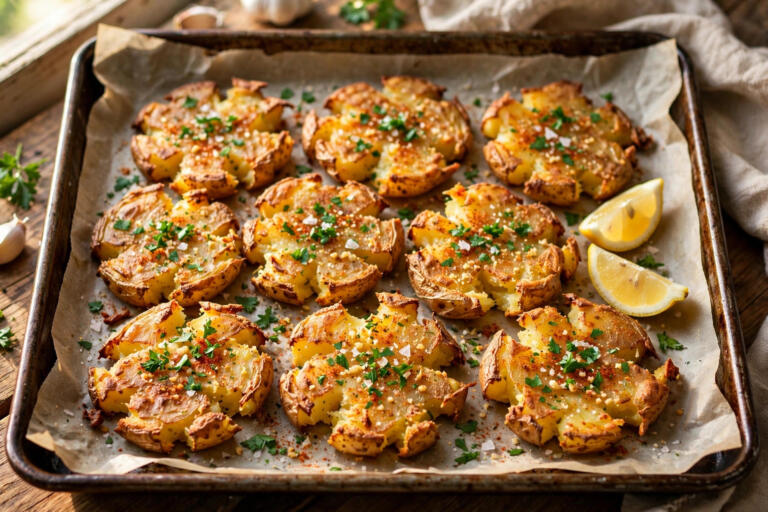 Dinner
30min
Garlic Paprika Smashed Potatoes (30 Minutes)
 Dinner
5min
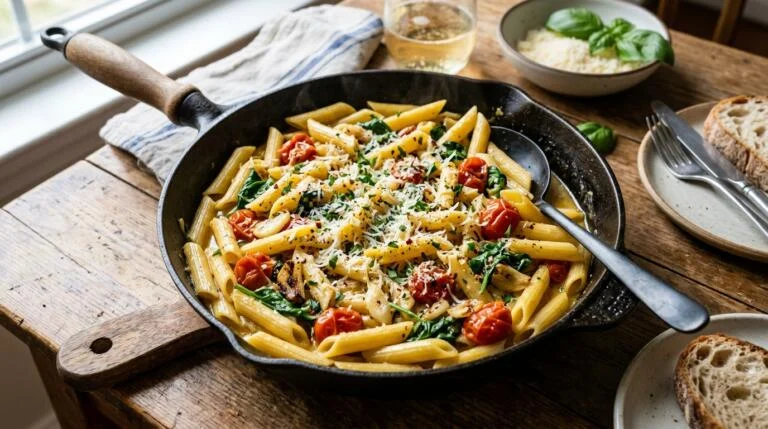
5-Minute One-Pan Garlic Butter Pasta
 Dinner
5min
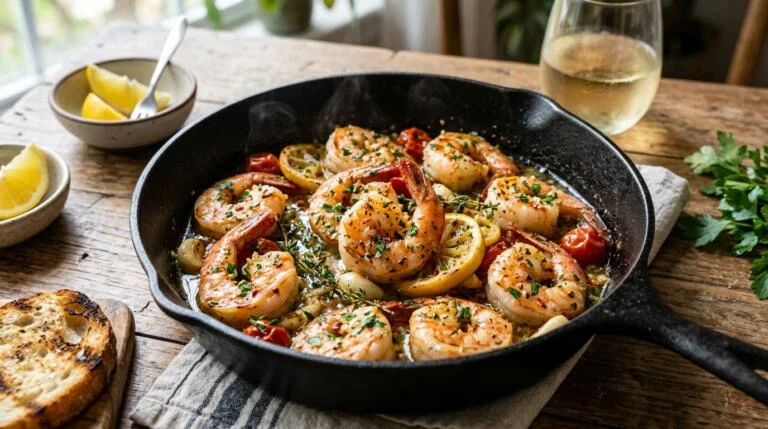
5-Minute Lemon Garlic Butter Shrimp
 Dinner
5min
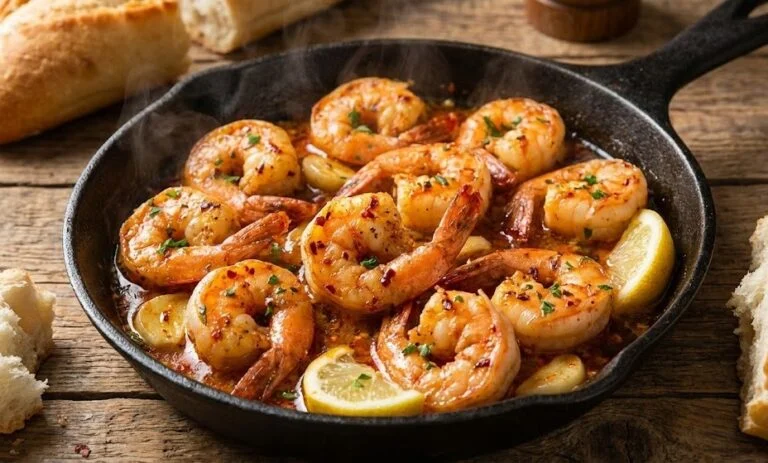
Quick & Spicy Garlic Shrimps with Butter Sauce
More recipes with dill
Other recipes in about 5 minutes
Reader reviews
No reviews yet. If you have made this recipe, you will be the first to say how it went.
Did you make this?
Tell us how it actually went — including if something did not work. Reviews are read before they are published.