Miso Butter Udon Noodles
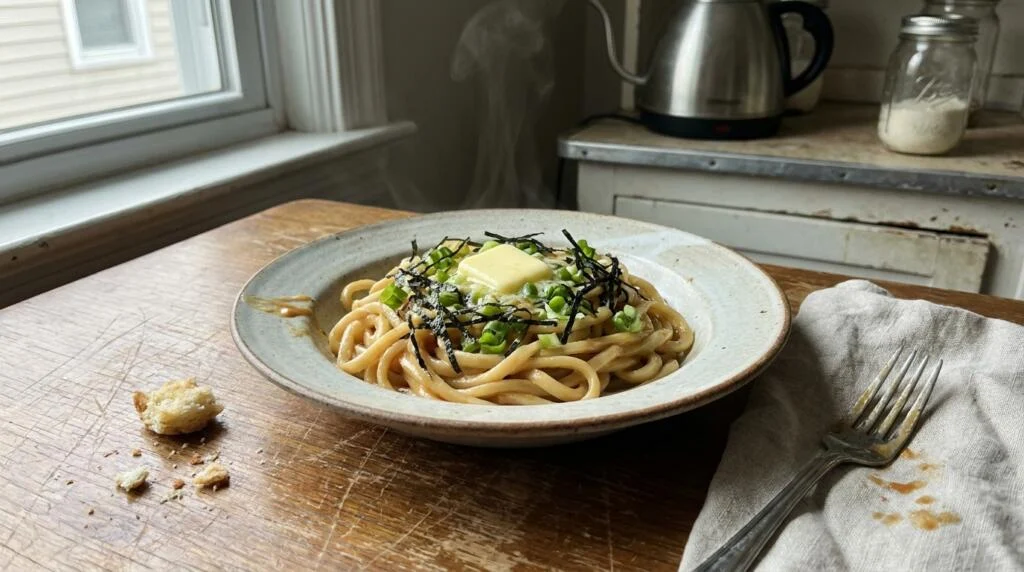
Thick udon tossed in a savoury miso butter sauce. Four pantry ingredients, twelve minutes, and it tastes far more complicated than it is.
Method
- Put the udon on to cook according to the packet. Fresh or frozen udon takes about 2 minutes, dried takes longer. Do not walk away, overcooked udon goes slimy.
- While they cook, mash the butter, miso, soy sauce, grated garlic and sugar together in your serving bowl with a fork until it forms a rough paste. Making the sauce in the bowl means one less pan.
- Before draining, save a full mug of the starchy noodle water. This is the ingredient that makes the sauce work and it goes down the sink if you are not paying attention.
- Drain the noodles and tip them straight into the bowl with the miso butter while they are as hot as possible.
- Add a splash of the noodle water and toss hard and continuously. The butter will melt, the miso will loosen, and within about 30 seconds it should turn into a glossy sauce that coats every noodle.
- Keep adding noodle water a splash at a time until it looks silky rather than thick and claggy. You will probably use three or four tablespoons.
- Do not put this back on direct heat. Miso contains live cultures and delicate aromatics, and boiling it flattens the flavour into something harsh and salty.
- Top with spring onion, sesame seeds and a drizzle of chilli oil.
Thick udon tossed in a savoury miso butter sauce. Four pantry ingredients, twelve minutes, and it tastes far more complicated than it is.
Nutrition per serving
- Calories
- 540 kcal
- Protein
- 16 g
- Carbs
- 78 g
- Fat
- 18 g
- Fibre
- 5 g
- Sugar
- 6 g
- Sodium
- 1180 mg
Values are estimates based on USDA FoodData Central and vary with brands and portioning.
Chef notes
This is the meal I make when I have nothing in and no interest in cooking. Miso is the whole reason it works, and it is worth keeping a tub in the fridge because it lasts for months and adds instant depth to almost anything. White miso is mild and slightly sweet, which is what you want here. Red miso is much stronger and will overwhelm the butter, so use less if that is all you have. The two things that go wrong are both about heat. If you add the miso to a hot pan on the stove, it loses the fermented complexity that makes it interesting and just tastes salty. And if you skip the noodle water, you get lumps of miso butter sitting at the bottom of the bowl instead of a sauce. That starchy water is doing the same job cream would do in a pasta sauce, so save more than you think you need.
Substitutions
- Udon: any thick noodle, or even spaghetti at a push — White miso: red miso, but use about a third less as it is much stronger|Butter: vegan butter or olive oil, though butter gives the best texture|Soy sauce: tamari for gluten-free|Sugar: honey or maple syrup
Serving suggestions
A fried or soft boiled egg on top makes it a fuller meal. Quick-cooked greens like pak choi or spinach stirred through work well. Some crispy fried shallots on top if you have them.
Storage
Best eaten immediately. Noodles absorb the sauce and go soft in the fridge, though it keeps a day if you must.
Reheating
Reheat in a pan with a good splash of water, tossing rather than stirring, to bring the sauce back together. Do not let it boil.
Equipment
- Pan for noodles
- Large serving bowl
- Fork
- Grater
Variations
- With mushrooms
- fry sliced mushrooms in the butter first, then add the miso off the heat
- Extra protein
- top with shredded chicken, crispy tofu or an egg
- Creamy
- add a tablespoon of tahini or peanut butter to the miso paste
- Spicy
- mash a teaspoon of gochujang or chilli crisp into the sauce
Why it works
Miso is fermented soybean paste, rich in free glutamates and nucleotides, which is why it delivers savoury depth that salt alone cannot. Those compounds are heat-sensitive, so keeping the sauce off direct heat preserves them. The sauce itself is an emulsion. Butter is fat and water, miso is largely water and solids, and the starch dissolved in noodle cooking water acts as a stabiliser, coating the fat droplets and holding them suspended so the sauce clings to the noodles rather than splitting into greasy pools.
Frequently asked questions
What kind of miso should I use?
White or shiro miso, which is mild and slightly sweet. Red miso works but use about a third less because it is much saltier and stronger.
Can I skip the noodle water?
No, this is the one thing you cannot skip. Without the starch the butter and miso will not emulsify and you get a lumpy bottom-of-the-bowl mess.
Why should I not cook the miso?
Heat destroys the delicate fermented aromatics and leaves it tasting flatly salty. Add it off the heat and toss.
Is miso healthy?
It is a fermented food with live cultures and it is high in sodium. Good in moderate amounts, worth knowing if you watch your salt.
Can I make it vegan?
Yes, use a vegan butter and check your miso, though most miso is naturally vegan.
What noodles work best?
Thick chewy udon holds this sauce best. Ramen, soba or even spaghetti all work.
Tags
More like this
 Dinner
5min
Garlic Butter Rice in a Mug
 Dinner
5min
Spicy Peanut Butter Noodles
 Dinner
15min
Chilli Garlic Butter Chicken (15 Minutes)
 Dinner
17min
Garlic Butter Shrimp Pasta (17 Minutes)
 Dinner
40min
Restaurant-Style Chicken Karahi
 Dinner
5min
5-Minute Korean Ground Beef Bowl
More recipes with noodle
Other recipes in about 12 minutes
Reader reviews
No reviews yet. If you have made this recipe, you will be the first to say how it went.
Did you make this?
Tell us how it actually went — including if something did not work. Reviews are read before they are published.